
Infected dog bite wounds can escalate from a routine injury into sepsis, hospitalization, amputation, or death within days. The Michigan Dog Bite Law Firm represents victims whose dog bite cases became serious because of infection — and we know how to document the full medical and legal impact.
Suffered a dog bite infection in Michigan? Get a free case review from Solomon Radner. Infection cases often have substantially higher settlement values due to medical complexity. No fee unless we win.
Approximately 10-20% of dog bite wounds become infected. For deep punctures, bites to the hand, and bites in elderly or immunocompromised victims, the rate is higher. What starts as a manageable injury can escalate quickly into cellulitis, abscess, sepsis, or — in severe cases — amputation or death.
Infections also significantly change the legal value of a dog bite case. The additional medical treatment, extended recovery, permanent complications, and increased risk of long-term consequences all translate into higher damages under Michigan law. This page explains the medical risk, the legal implications, and what infected bite victims need to know.
Why Dog Bite Wounds Get Infected
A dog’s mouth contains hundreds of species of bacteria. When the teeth puncture human tissue, they inject those bacteria deep into wounds that are difficult to clean. The wound itself — with crushed and torn tissue — provides an ideal environment for bacterial growth. Common infectious organisms in dog bite wounds include:
- Pasteurella multocida — present in approximately 50% of infected dog bites. Causes rapid-onset infection, often within 24 hours.
- Staphylococcus and Streptococcus species — common skin bacteria that contaminate the wound and can cause cellulitis.
- Capnocytophaga canimorsus — rare but potentially catastrophic. Can cause overwhelming sepsis, particularly in immunocompromised or splenectomized victims. Mortality without rapid treatment exceeds 30%.
- Anaerobic bacteria — Fusobacterium, Bacteroides, and others. Common in deep puncture wounds where oxygen is limited.
- Eikenella corrodens — common in human bites but also occurs in dog bites; difficult to treat with first-line antibiotics.
For the full medical breakdown of these infections and how they progress, see our in-depth medical guide.
Categories of Infection Complications
Localized infection
The most common form. Redness, swelling, warmth, pain, and pus around the wound site. Usually treatable with oral antibiotics if caught early. Even “minor” infections add multiple medical visits, missed work, and extended recovery to a case — all of which are compensable.
Cellulitis
Infection that spreads through the skin and underlying tissue. Visible as expanding redness and warmth radiating from the bite. May require IV antibiotics and hospitalization. Often leaves permanent skin changes.
Abscess
A pocket of pus that forms in the wound. Often requires surgical drainage. Hand bite abscesses are particularly serious and frequently require operating room procedures.
Tenosynovitis
Infection of a tendon sheath, almost always from a hand bite. Can permanently destroy hand function if not treated rapidly. Often requires emergency surgery.
Osteomyelitis
Bone infection. Particularly common when the bite reaches bone — finger and hand bites are highest risk. Treatment requires weeks of IV antibiotics and often surgery to remove infected bone. Can result in permanent functional loss.
Sepsis and septic shock
Systemic infection that spreads through the bloodstream. Medical emergency requiring ICU admission. Survivors often have lasting consequences — kidney damage, cognitive impairment, fatigue, or permanent organ dysfunction. Mortality is significant.
Amputation
In severe finger, hand, or foot infections — particularly with osteomyelitis or necrotizing infections — amputation may be required to control the infection or salvage function in the remaining limb.
Necrotizing infection (“flesh-eating”)
Rare but devastating. Bacteria spread along tissue planes faster than the body can fight back. Requires emergency surgical debridement — sometimes multiple operations — and carries high mortality and disability.
High-Risk Bite Scenarios
Some bite scenarios carry substantially higher infection risk and warrant heightened concern:
- Hand bites — highest infection rate of any bite location due to tendons, joints, and limited blood supply
- Deep punctures — small entry wound but extensive deep tissue damage that traps bacteria
- Bites near joints — risk of joint space infection (septic arthritis)
- Bites in elderly victims — reduced immune function and slower healing
- Bites in immunocompromised victims — diabetes, cancer treatment, HIV, splenectomy
- Delayed treatment — wounds not cleaned and antibiotic-covered within 8 hours have substantially higher infection rates
- Wounds sutured closed inappropriately — some dog bite wounds should be left open or partially closed to allow drainage; primary closure increases infection risk
Why Infected Bite Cases Have Higher Settlement Value
Infection complications change the math of a dog bite case in several ways:
- Additional medical bills — hospitalization, IV antibiotics, surgery, specialist care, follow-up imaging. Each layer of treatment adds to economic damages.
- Extended recovery time — more lost wages, longer impairment, more pain and suffering days.
- Permanent complications — chronic pain from osteomyelitis, joint stiffness after septic arthritis, kidney damage from sepsis, permanent functional loss from tenosynovitis, scarring from surgical incisions.
- Future medical projections — ongoing treatment, future surgeries, medication, monitoring.
- Future earning capacity — for cases involving hand infections or amputation, career impact can be permanent.
- Emotional trauma — surviving sepsis or facing amputation produces lasting psychological injury.
Michigan’s strict liability statute covers all damages flowing from the bite, including downstream infection complications. The dog owner does not get to argue that the infection was the hospital’s fault or somehow separate from the bite — the bite caused the infection, and the bite is what triggers strict liability.
Warning Signs That a Bite Wound Is Infected
Any of these signs after a dog bite warrants immediate return to medical care:
- Increasing redness around the wound (especially if expanding)
- Swelling that worsens after the first 24-48 hours
- Warmth radiating from the wound
- Pus or cloudy fluid draining from the wound
- Red streaks moving away from the bite (lymphangitis — emergency)
- Fever, chills, or feeling generally unwell
- Pain that increases rather than decreases over time
- Loss of function in a finger, hand, or joint near the bite
- Sweating, rapid heart rate, confusion (signs of sepsis — go to ER immediately)
What to Do if Your Bite Wound Becomes Infected
- Return to medical care immediately. Do not wait. Go to the ER if symptoms are severe (red streaks, fever, sepsis signs) or your primary care provider/urgent care if early infection. Time matters.
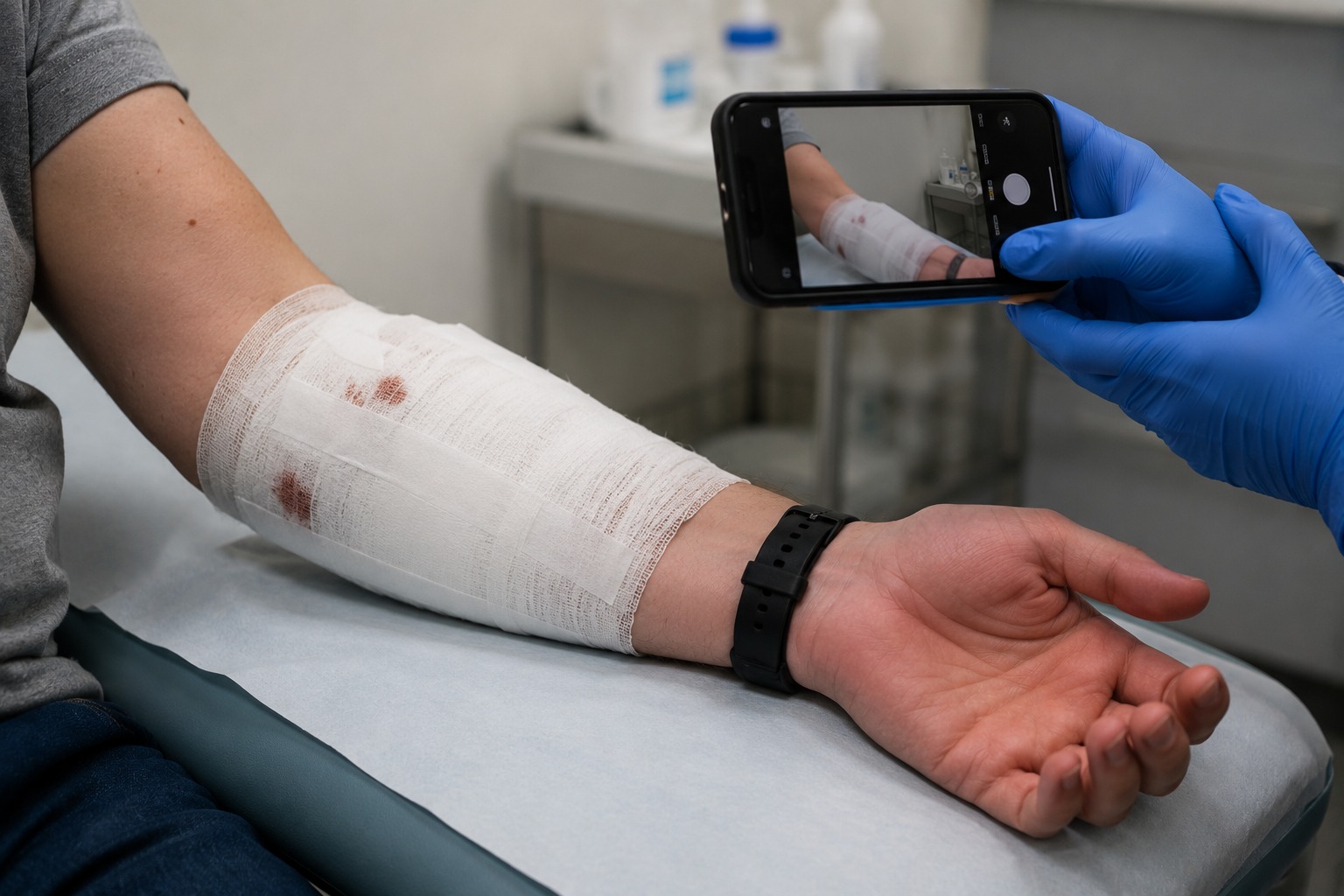
- Photograph the infection. Daily photos document the progression — powerful evidence in the case.
- Keep every medical record. Antibiotic prescriptions, lab results, hospital admission records, imaging, specialist consultations. All of it.
- Follow the treatment plan completely. Finish every antibiotic course. Attend every follow-up. Insurance companies use treatment gaps to argue the infection was not serious.
- Track lost work time. Every day missed because of the infection.
- Do not give statements to insurance. The dog owner’s insurance will minimize the connection between bite and infection if given the chance.
- Contact a Michigan dog bite attorney. Infection cases require specialized handling. Call The Michigan Dog Bite Law Firm at (313) 474-8203 for a free case review.
Why Choose The Michigan Dog Bite Law Firm
Infection cases require careful medical documentation and expert testimony to establish causation, severity, and future implications. The Michigan Dog Bite Law Firm works with infectious disease specialists, hand surgeons, and life-care planners to fully document infection cases and project lifetime medical costs.
For the medical deep-dive on dog bite infection — Pasteurella, Capnocytophaga, sepsis, and what every victim should know — see our complete guide on dog bite infection and medical complications.
Solomon Radner is a Michigan Super Lawyer (every year since 2014). The firm operates on contingency — no fee unless we win. The case review is free.
Suffered a dog bite infection in Michigan? Call (313) 474-8203 or request a free case review. No fee unless we win.